4 December 2024
Why is truffle always wrapped in a blue cloth? The curious story of a centuries-old tradition
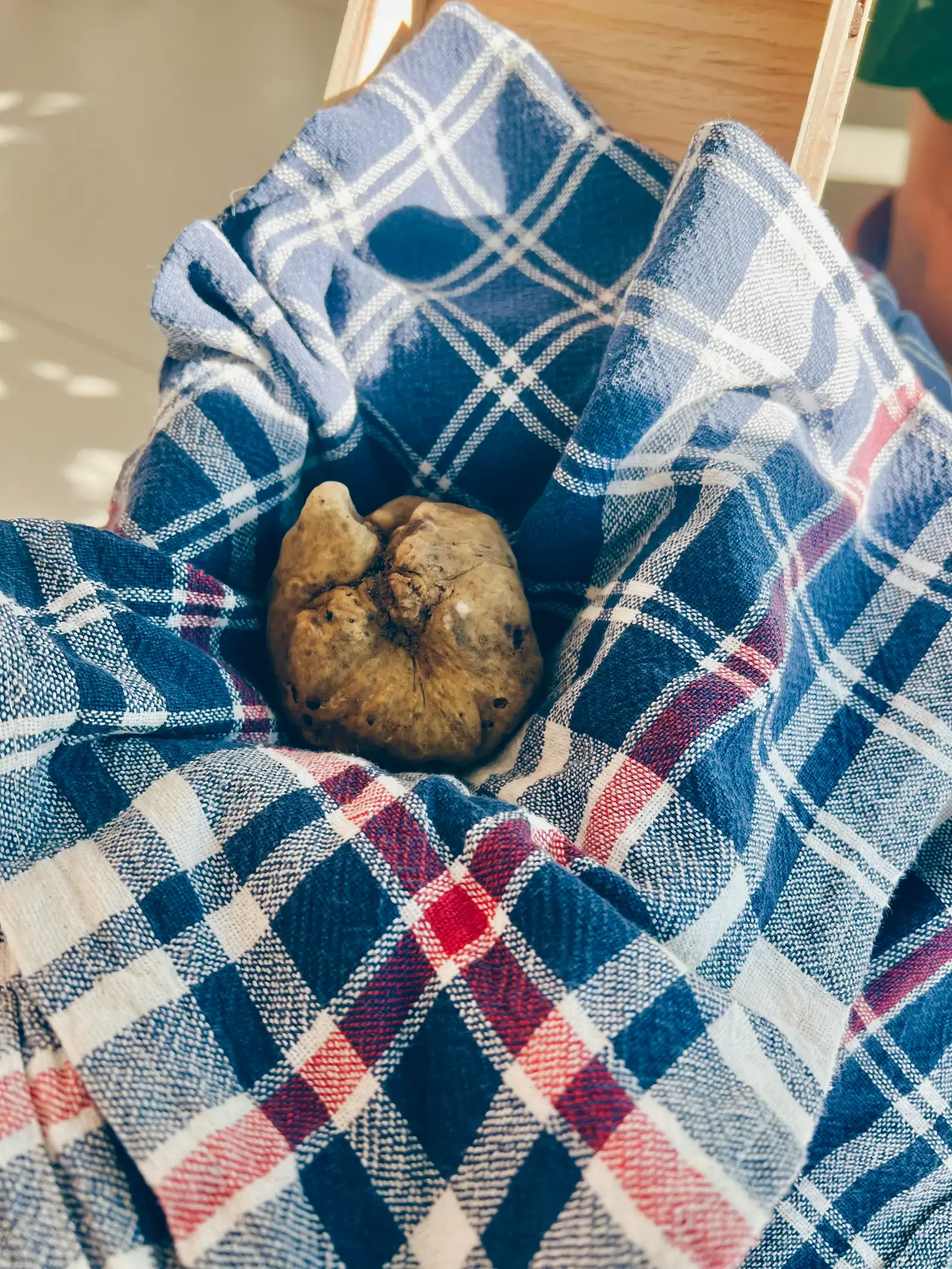
Have you ever wondered why the cloth used to store and transport truffles is always the same—and always blue?
Mr. Beppe, a great expert in the field, often reminds us that “in the world of truffles, there is no cloth that isn’t blue.” But why this choice? What is the function of this accessory that has never changed over the years? Let’s explore this small yet essential detail of truffle tradition.
The choice of blue is not random. Historically, the dyes used to color fabrics blue have proven to be extremely stable. This means that blue is one of the least likely colors to release pigments or stain—an essential quality when wrapping a delicate and precious product like truffles. Moreover, blue has long been associated with cleanliness and hygiene, and this connection with safety and neutrality has become deeply rooted in truffle culture, making blue the traditional color for this tool.
However, it’s not just about color: the material of the cloth plays a crucial role. Traditionally, it is made of cotton, a natural material that provides the right level of absorbency to keep the truffle dry, protecting it from condensation while still allowing it to breathe. This is essential to ensure that the truffle retains its aroma and quality, preventing moisture from compromising the product. Additionally, the strength and lightness of the fabric—washed strictly with water and no detergent—ensure that the truffle is well protected during transport without adding unnecessary weight. The weight of the cloth is, in fact, a carefully considered detail. All truffle cloths weigh between 90 and 100 grams, depending on retained moisture—a calibrated and well-known measure among traders to avoid significantly affecting the overall weight of the truffle, a crucial factor in sales. For this reason, truffle hunters carefully select lightweight yet durable fabrics that perform their function without interfering with weighing. However, it’s important to note that during official weighing, the cloth is always removed to ensure an accurate measurement of the truffle alone.
In conclusion, the blue cloth is not just a practical item—it is a true symbol of tradition and belonging to a world where every detail matters. From the hills of the Langhe to markets around the world, this simple piece of fabric represents the care and respect for one of Italy’s most precious gastronomic treasures. And so, every time we see a truffle wrapped in its classic blue cloth, we can imagine the long story behind it—one of passion and dedication, hidden within this small gesture.